





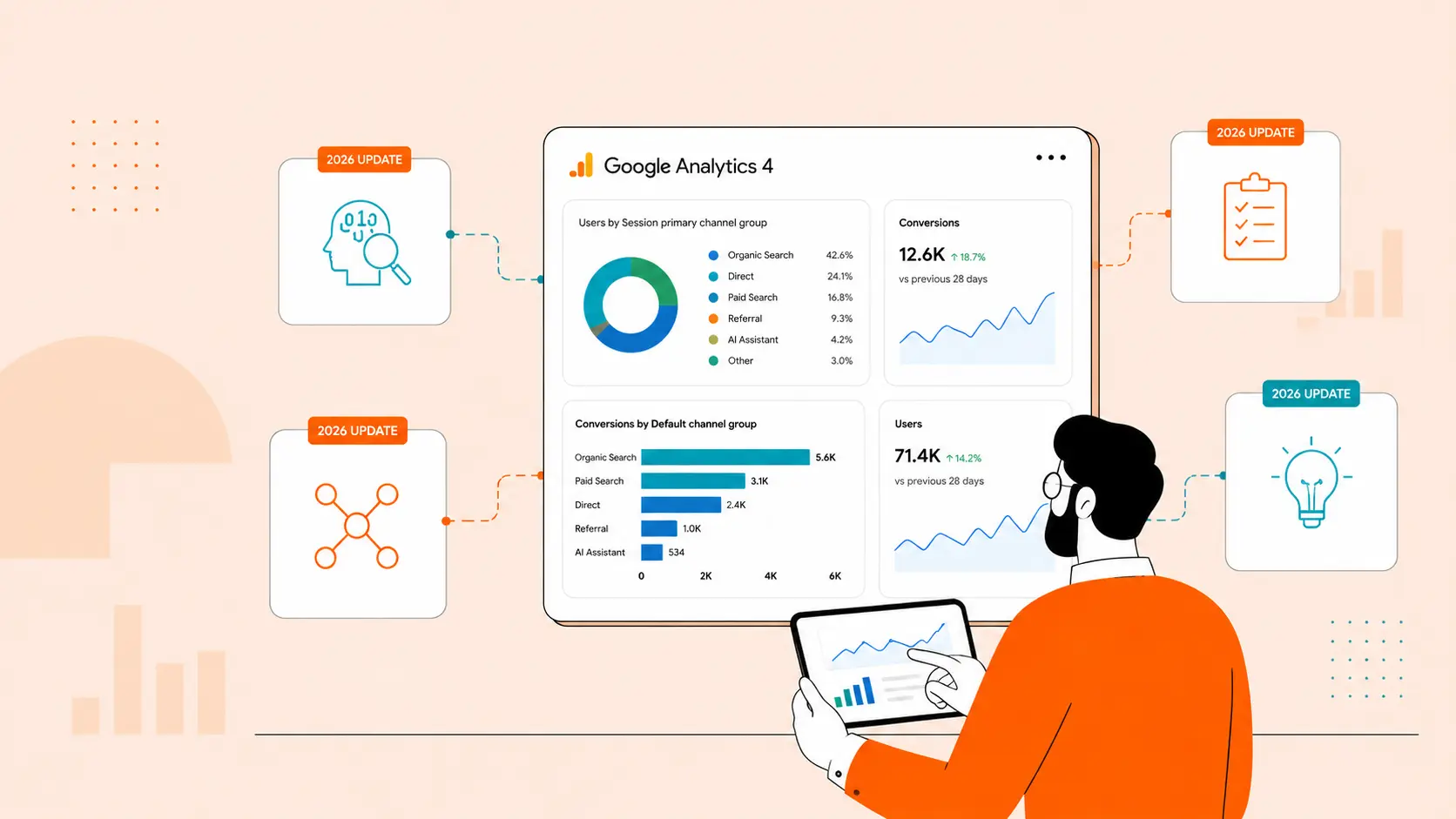


It is mid-February. By now, the ink is dry on your 2026 marketing roadmap. You likely opened your 2025 Google Analytics 4 (GA4) reports, calculated the year-over-year delta, and set a standard target: Grow organic sessions by 15%. Increase conversions by 10%. Even our own post last year points in this direction.
On paper, this looks disciplined. In reality, it is inertia.
If your 2026 marketing strategy relies solely on 2025’s traffic totals, you are optimizing for an internet that no longer exists.
The search landscape changed faster than most reporting frameworks did. AI Overviews now sit above traditional listings. Users skim, scan, and often get answers without ever clicking a blue link. At the same time, GA4 has matured into a platform for predicting user behavior, not just counting hits.
In 2026, visibility no longer equals clicks.
If you measure success by "Organic Sessions" alone, you miss the invisible half of the funnel. Here is how to use GA4 and Search data to shift from chasing volume to capturing value.
The Shift: From "Search Impressions and Clicks" to "Search Visibility"
2025 was the year the "Click" decoupled from "Influence."
In the past, if a user saw your brand in search, they clicked. Now, between Google’s AI Overviews and answer engines, users often consume your expertise, trust your brand, and move on—without a session ever recording in GA4.
Recent data confirms this behavior is also reshaping paid media. Reports from Search Engine Roundtable indicate Google’s AI Overviews are actively redirecting user clicks toward Shopping Search Ads rather than organic results. The user journey is shorter, and the organic entry point is disappearing.
The Fix: Measure the halo, not just the click.We advise clients to create a new goal category for AI Visibility.
- Microsoft Clarity: Use the new AI citation features (currently in early access) to see how your content influences AI-generated answers.
- Bing Webmaster Tools: Monitor the AI Performance report to track citations in chat responses.
- Branded Search: If organic traffic is flat but branded search volume rises in Search Console, your marketing works—it just happens zero-click.
Start with 2025 - But Look for Signals, Not Just Totals
This is usually the first thing we notice when reviewing year-end data, that's treating volume as success.
Instead of asking whether traffic increased, ask where the value actually came from.
When we review data for clients like Lancaster Orthopedic Group, we aren’t simply looking for more users. We’re looking for patients, the actual audience segments that book appointments, not just readers who skim a blog post and leave.
Here’s a real example from a The Helm Annual Business Review. Traffic volume looked healthy at first glance, but the conversion efficiency told a very different story.
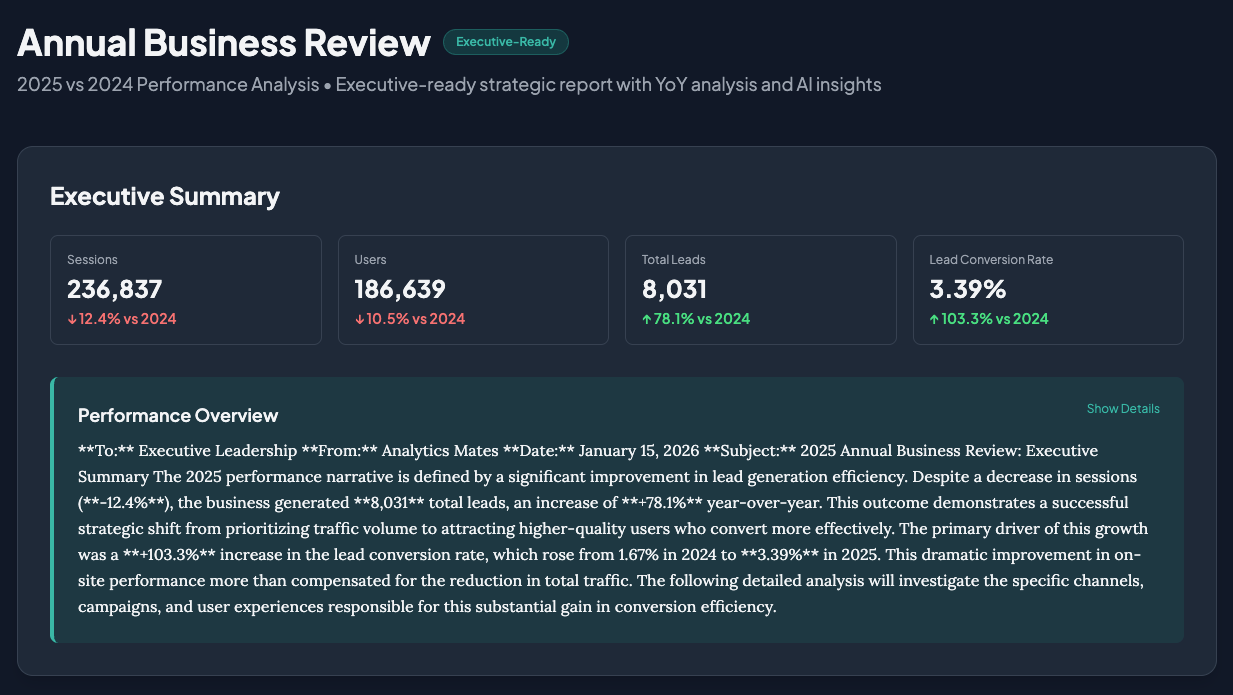
The takeaway wasn’t “get more traffic.” It was “double down on what already converts.”
When we review year-end data, we separate raw conversions from qualified leads users who show clear buying intent or move deeper into the funnel. In GA4, this usually means tracking higher-intent events such as booked consultations, completed multi-step forms, or engagement milestones that historically lead to revenue.
For example, two channels might generate the same number of leads, but one consistently produces users who schedule calls or return later to convert. That difference only becomes visible when qualified lead events are clearly defined and measured.
Before looking at growth numbers, we usually ask three simple questions:
- Which channels became more efficient, not just bigger?
- Where did engagement quality improve?
- Which audiences generated the most revenue relative to their size?
GA4’s attribution analysis reports are especially useful here. They help separate “lucky” single-touch wins from channels that consistently assist conversion journeys.
Volume without context leads to shallow planning. Your 2026 goals should be built around quality signals, not vanity metrics.
Add AI Visibility as a New Goal Category
This is the layer most teams ignored in 2025.
AI-generated summaries and answer engines (Google’s AI Overview) are quietly reshaping how users discover brands. In many cases, users get the information they need without clicking through at all. We covered this in more detail in our guide on How to Measure Generative AI Model Traffic on Your Website with GA4, where we explain the filters and reporting setup used to separate AI visibility from standard organic sessions, and also shared a post on How We’re Responding to AI Overview’s Impact on SEO.
Britney Muller, an AI educator we respect, warned about applying traditional SEO thinking here: “The biggest risk to our industry in 2026 is trying to fit a baseball bat through a keyhole by applying SEO ranking logic to probabilistic systems.”
One practical way to measure this shift is by using Microsoft Bing Webmaster Tools (AI Performance report), which now shows how your brand appears inside AI-generated results, including citations and mentions.
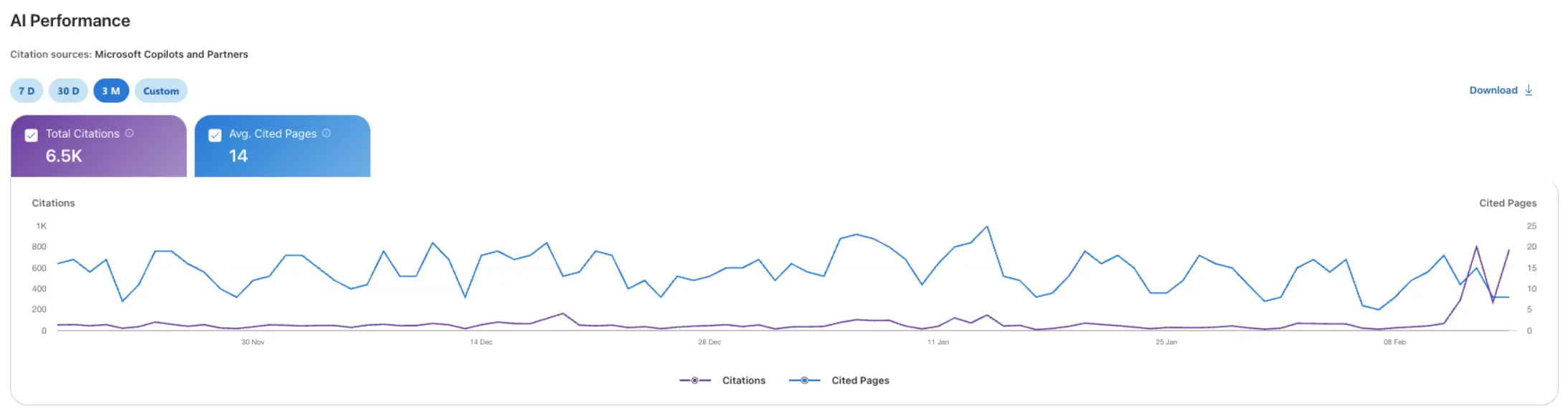
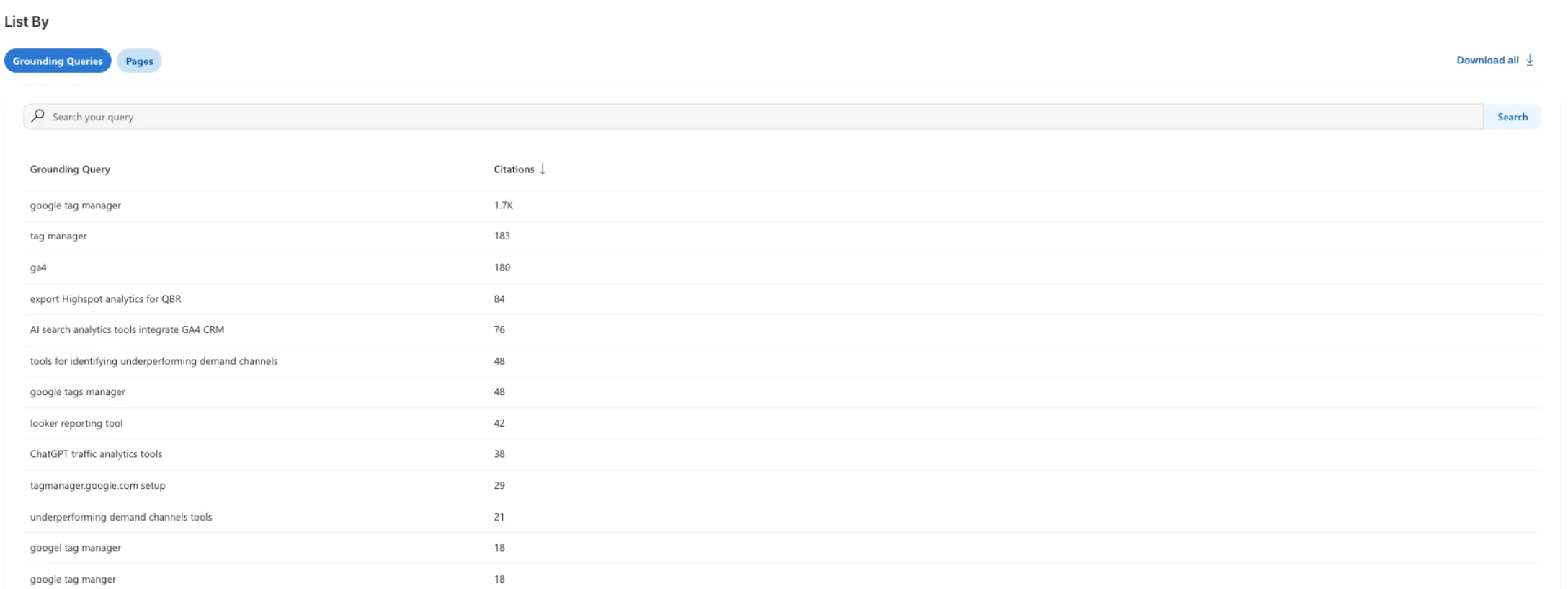
We typically pair this with two additional layers:
- Google Search Console impressions and clicks to see traditional search visibility.
- GA4 traffic and conversion data to confirm whether visibility is translating into real business outcomes.
This three-layer view helps teams separate visibility from traffic, and traffic from qualified performance.
Many teams won’t notice this shift until traffic appears flat while brand recognition grows behind the scenes. This is why visibility deserves its own goal category, not just a note under SEO.
Focus on Audience Quality, Not Just More Traffic
If you dig into your 2025 data, you’ll likely find something familiar: a small percentage of users drive most of the value. And honestly, that’s normal. It’s where better goals usually come from.
Instead of broad targets like “Increase traffic by 20%,” consider goals such as:
- Improve retention among high-intent users.
- Increase conversions from returning visitors.
- Expand high-value audience segments.
GA4’s predictive capabilities matured significantly in late 2025. Metrics like:
- Purchase Probability
- Churn Probability
- Predicted Revenue
allow teams to think more strategically about audience behavior.
In several audits , we’ve seen returning users convert two to three times higher than new visitors, yet most growth strategies still focus solely on acquisition. In 2026, audience quality matters more than audience size.
Audit Your Measurement Before Setting Goals
This is the step most teams skip and it’s often the reason goals fail.
If measurement isn’t stable, the goals won’t be either.
Mid-2025 introduced Automatic Google Tag Firing updates in Google Tag Manager, changing how tags load to improve data capture. If your GTM container hasn’t been audited since then, your baseline numbers may no longer be reliable.
Before finalizing 2026 targets, verify:
- Consent Mode v2: Proper implementation to avoid data loss, especially in EEA traffic.
- Duplicate tags: Remove lingering Universal Analytics “ghosts.”
- Event taxonomy: Ensure naming conventions are consistent and meaningful.
- Conversion validation: Confirm critical events are firing correctly.
Before setting new goals, we run a structured measurement audit using the same Google Tag Manager checklist our team applies across client accounts. This helps ensure the data you’re planning from is stable, consistent, and actually usable for decision-making.
This is the GTM Audit checklist we use during Analytics Mates audits before moving into strategy or goal planning.
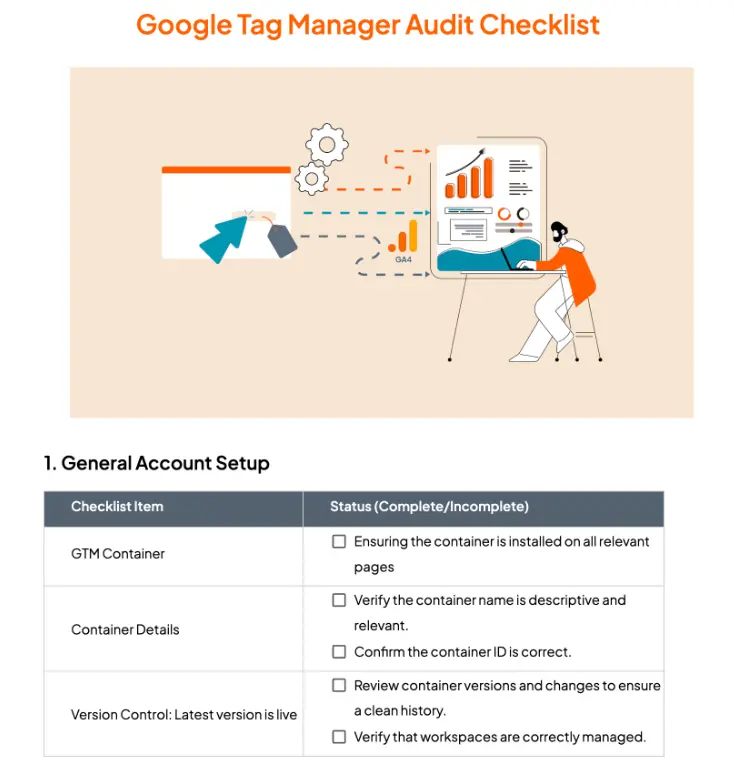
Feel free to explore our blog post and free resources to help you audit your Google Tag Manager setup.
We honestly rarely see containers that stay clean for long after a year or two without intentional governance. Remember this, if measurement is noisy, strategy becomes guesswork.
Move Beyond SMART - Add Strategic Context
SMART goals remain useful. But in 2026, they’re only the baseline. Like this example of our Annual Business Review template.
Inside our Annual Business Review framework, the goal isn’t just to summarize performance -it’s to guide decision-making for the next year.
For example, the Executive Summary highlights the biggest strategic insights first: what improved, what declined, and where opportunity exists. From there, we review performance by channel, identify top-performing pages and blog content, and evaluate which audience segments actually contributed to business outcomes.
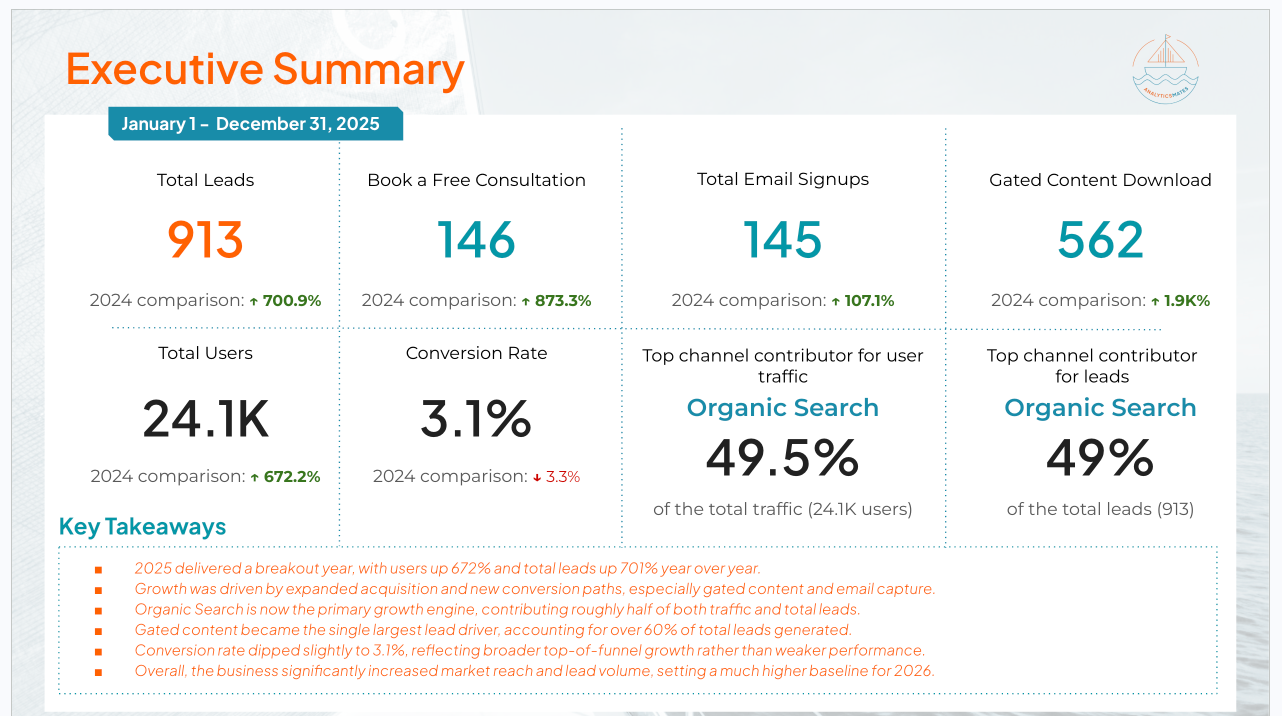
Instead of starting with targets like “increase traffic,” we start with questions like:
- Which channels produced the most efficient conversions?
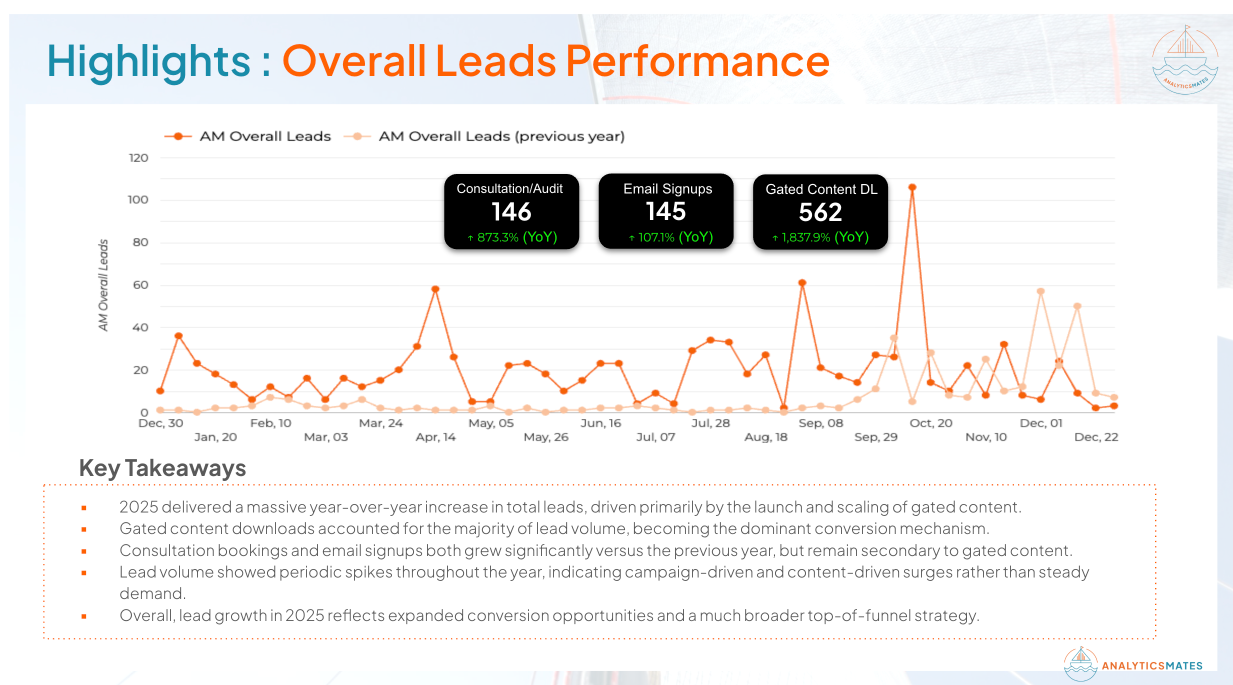
- Which content attracted qualified users, not just clicks?
- Where did engagement translate into measurable business value?
This creates a clearer foundation for setting realistic 2026 goals.
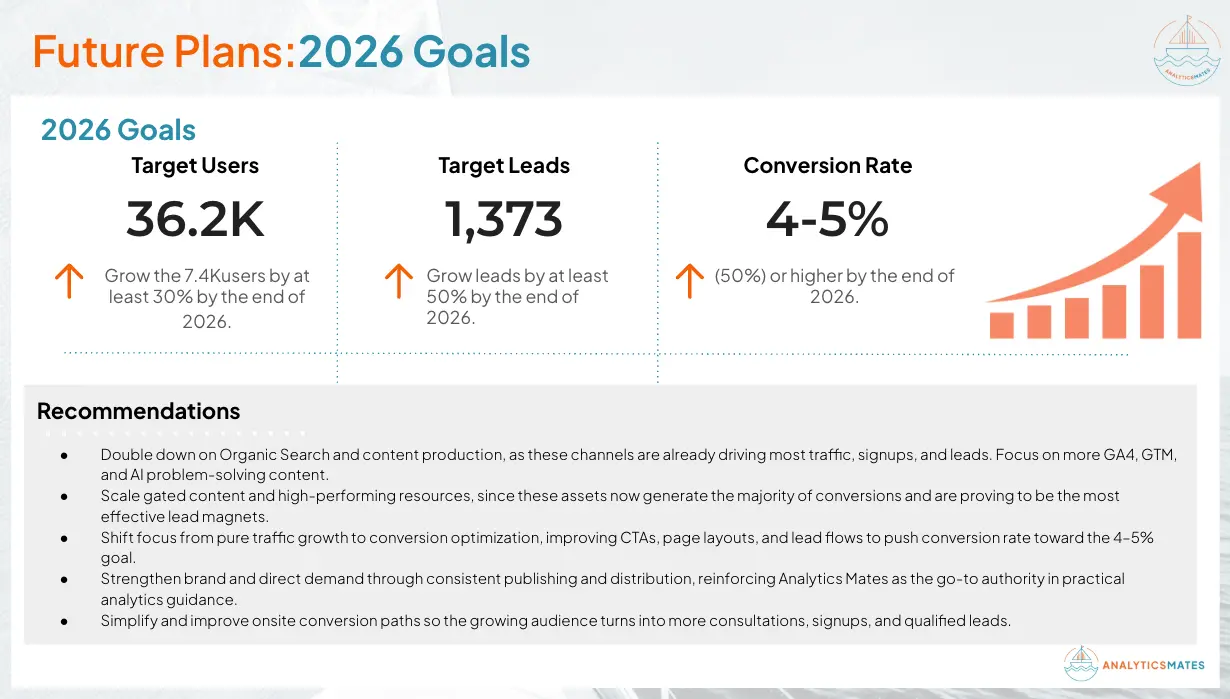
SMART goals still matter but without strategic context, they often lead teams to optimize activity rather than outcomes.
So, ask:
- Does this goal attract more ideal customers or just more traffic?
- Are we improving efficiency or just increasing activity?
- Can we trust the measurement behind this target?
Good goals aren’t just measurable. They’re aligned with audience value and grounded in reliable data.
If you’re looking for a faster way to organize this process, tools like The Helm can help structure the analysis, but the thinking behind the framework matters most.
FAQs
These are the questions we’ve been hearing most often lately:
How do I measure AI visibility if it doesn’t always generate clicks?
A: Track branded search growth, monitor impression-level data, and review AI citation reports where available. Visibility is broader than sessions.
Should I prioritize acquisition or retention in 2026?
A: Retention often delivers higher ROI. Review your returning user conversion rates before defaulting to traffic growth.
How do predictive metrics influence goal-setting?
A: They help you prioritize high-value segments and identify churn risk before it impacts revenue.
What if my 2025 data is incomplete?
A: Fix measurement gaps first. A short audit now is better than planning around flawed assumptions.
How often should I revisit 2026 goals?
A: Quarterly reviews are ideal. Adjust based on channel shifts and measurement improvements.
Do AI search results reduce the importance of SEO?
A: No. They change it. Structured, authoritative content becomes even more important.
Should benchmarks override internal growth targets?
A: Benchmarks inform targets. They shouldn’t replace business ambition, but they prevent unrealistic planning.
What’s the first step if my data feels overwhelming?
A: Identify three metrics that directly tie to revenue or business impact. Start there.
Conclusion
2026 planning isn’t about building more dashboards. It’s about making better decisions.
When you review 2025 performance, don’t just count sessions. Look for signals. Look for efficiency. Look for the audiences that actually drive value, maybe something like the patients finding Lancaster Orthopedic Group, not just random browsers.
Clean your measurement. Factor in AI visibility. Set goals that reflect the reality of today’s market, not just the history of your spreadsheet.
Need a second set of eyes on your 2026 roadmap?
We’re currently auditing GA4 setups and GTM containers to help teams start the year with clean, reliable data. Reach out and let’s make sure your measurement is ready for smarter goals.
Thank you for reading!
We're always looking for ways to improve our Google Analytics 4 blog content. Please share your feedback so we can make it even better.
See Article Images


