
How to Measure AI Visibility Using Bing Webmaster Tools, Google Search Console, and GA4
Getting cited inside an AI answer feels like progress.
But if it doesn’t lead to traffic, engagement, or revenue, what did it actually accomplish?
Over the past few months, I’ve seen a consistent pattern across client accounts and our own properties: impressions increase, mentions increase, but clicks stay flat. Sometimes they decline. Even for our own business, Analytics Mates, we have seen impressions increase while clicks stay flat or decline and we have been testing ways to respond, which we covered in last week’s blog - how we are adapting to AI Overviews and their impact on SEO.
That’s not a reporting glitch. It’s a behavior shift.
AI answers increasingly satisfy intent directly on the results page. Users get what they need without clicking. That forces a different way of reading performance data.
In this post, we will show you a practical way to measure AI visibility using these tools: Bing Webmaster Toolsl, Google Search Console, and Google Analytics 4.
If you treat AI citations like rankings, you’ll misinterpret what’s happening.
Here’s how I measure it properly.
AI Visibility Is Exposure - Not Performance
You can now appear inside AI-generated answers without earning a single visit.
Your brand is mentioned.
Your content is cited.
GA4 doesn’t move.
That disconnect matters.
AI visibility is exposure.
Traffic and conversions are performance.
They overlap sometimes. But they are not interchangeable.
Citations are diagnostic signals. Not trophies.
Step 1: Start with AI Citations in Bing Webmaster Tools
Open Bing Webmaster Tools and go to the AI Performance section.
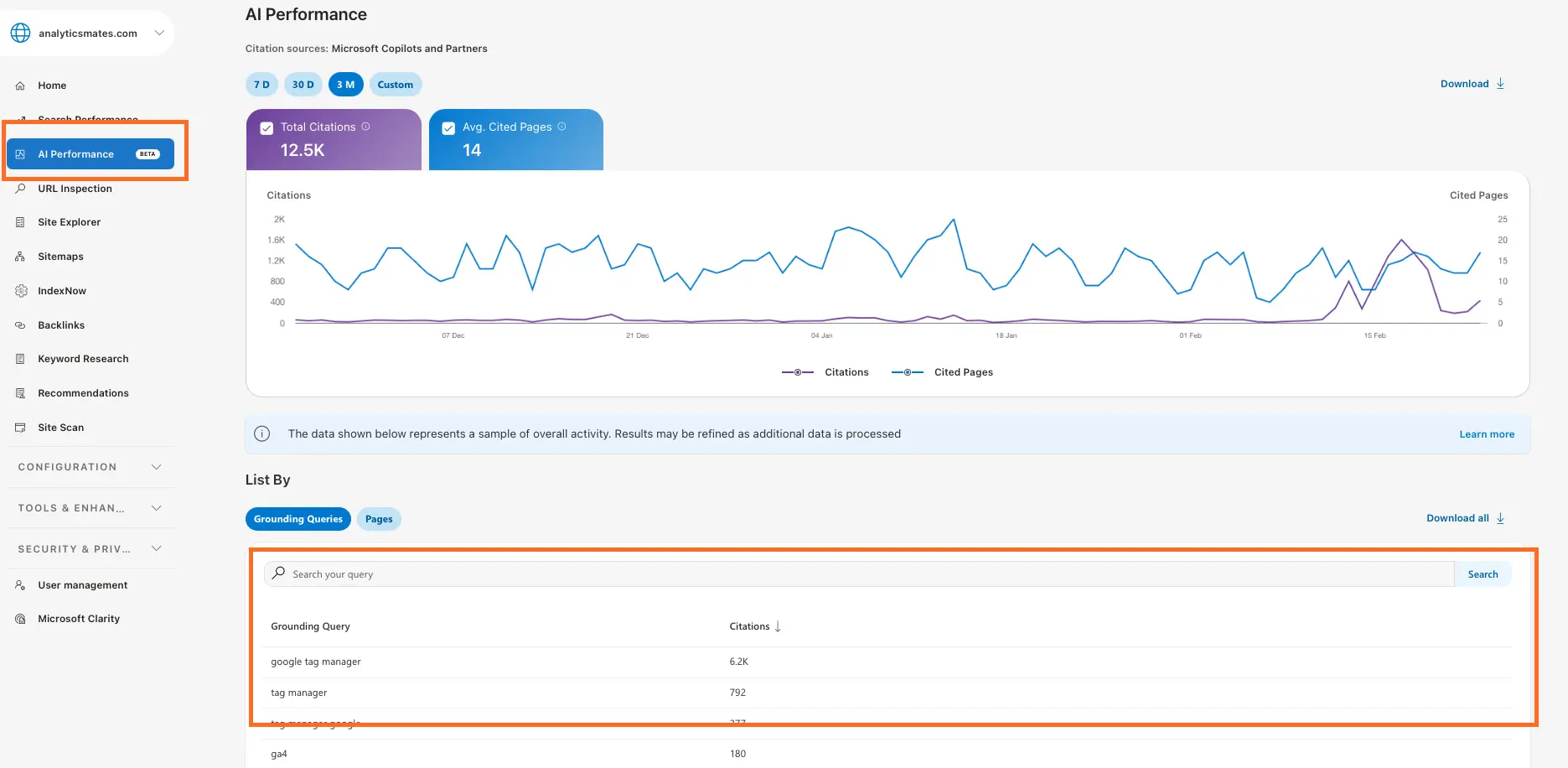
This report shows when your content appears inside AI-generated responses. It does not show clicks. It does not show conversions. It shows inclusion.
Start simple.
Look at:
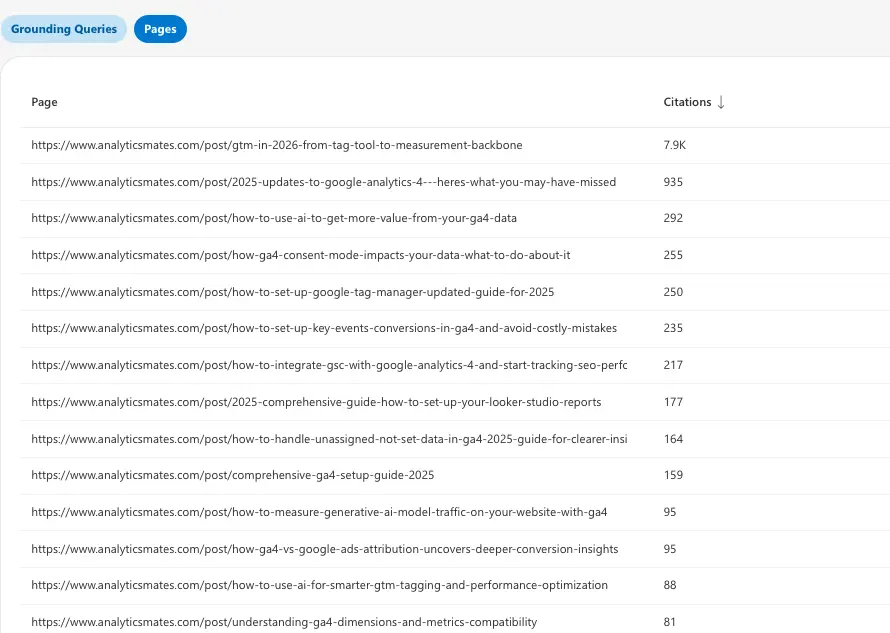
- Which pages are cited most
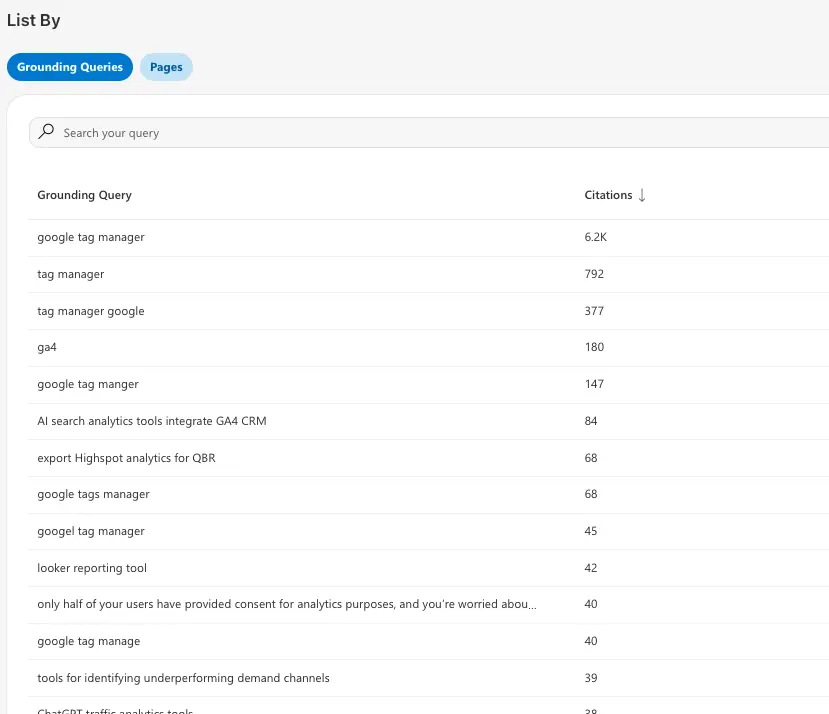
- Which queries trigger citations
- Whether trends are increasing or flat
Then step back and ask better questions:
- What kind of searches are these?
- Which pages are getting cited?
- Are the pages that drive revenue showing up at all?
Citations usually point to strong structure, clear answers, and topical authority. But do not confuse this with results. It is awareness-level data.
Nothing more.
Step 2: Compare It With Google Search Console
Now open Google Search Console.
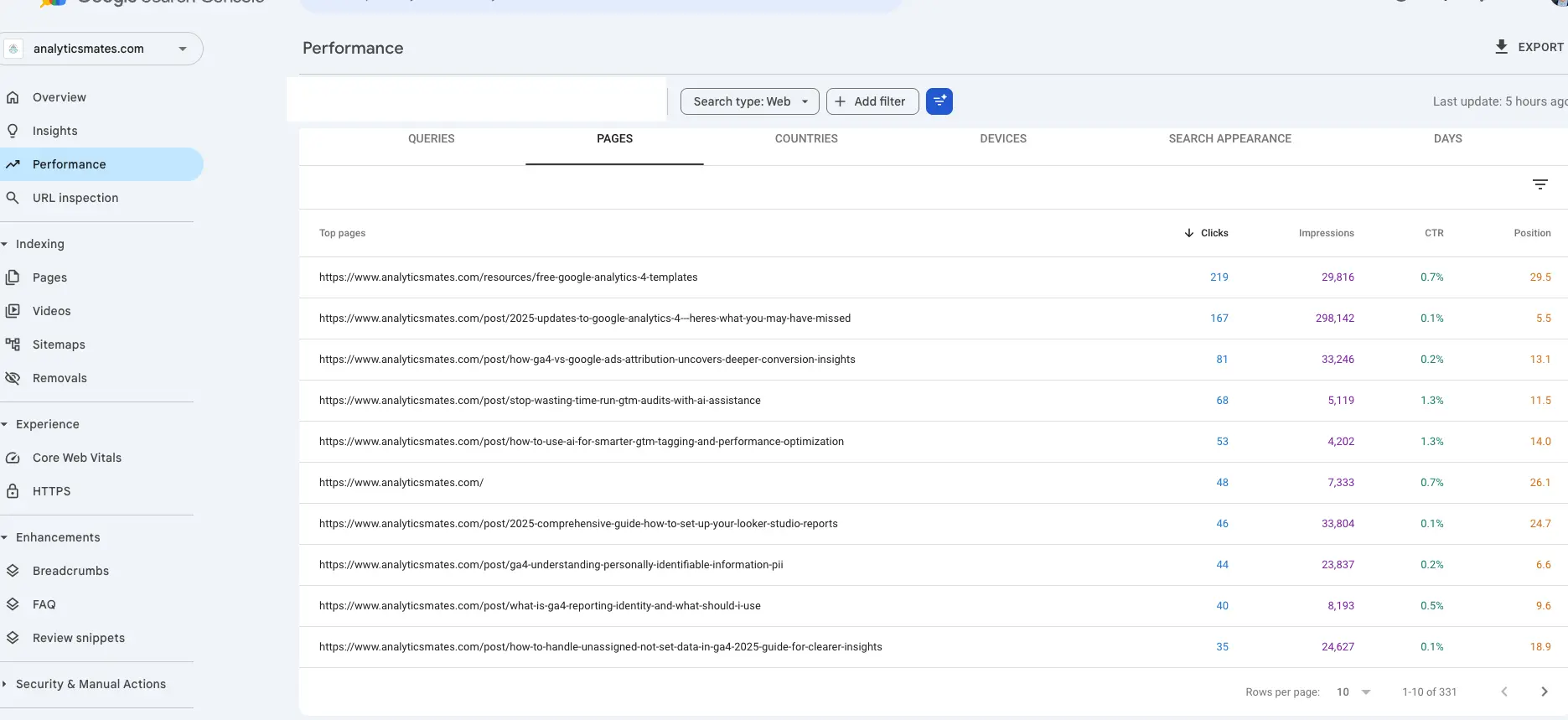
Pull up the same pages and look at:
- Impressions
- Average position
- Click-through rate
Here’s where things get interesting.
You may find pages that:
- Rank well but are never cited
- Get cited even while ranking on page two
- Rank in the top five but still struggle with CTR
That tells you where the gap is.
If a page ranks but is not cited, it may not be structured clearly enough for AI extraction. If it is cited but not ranking strongly, you may have authority but weak search fundamentals.
Now your strategy starts forming.
Step 3: Validate in GA4
This is where theory ends.
Open Google Analytics 4.
Pull data for cited pages and check:
- Sessions
- Engagement rate
- Average engagement time
- Conversion rate
- Assisted conversions
Do these pages:
- Bring traffic?
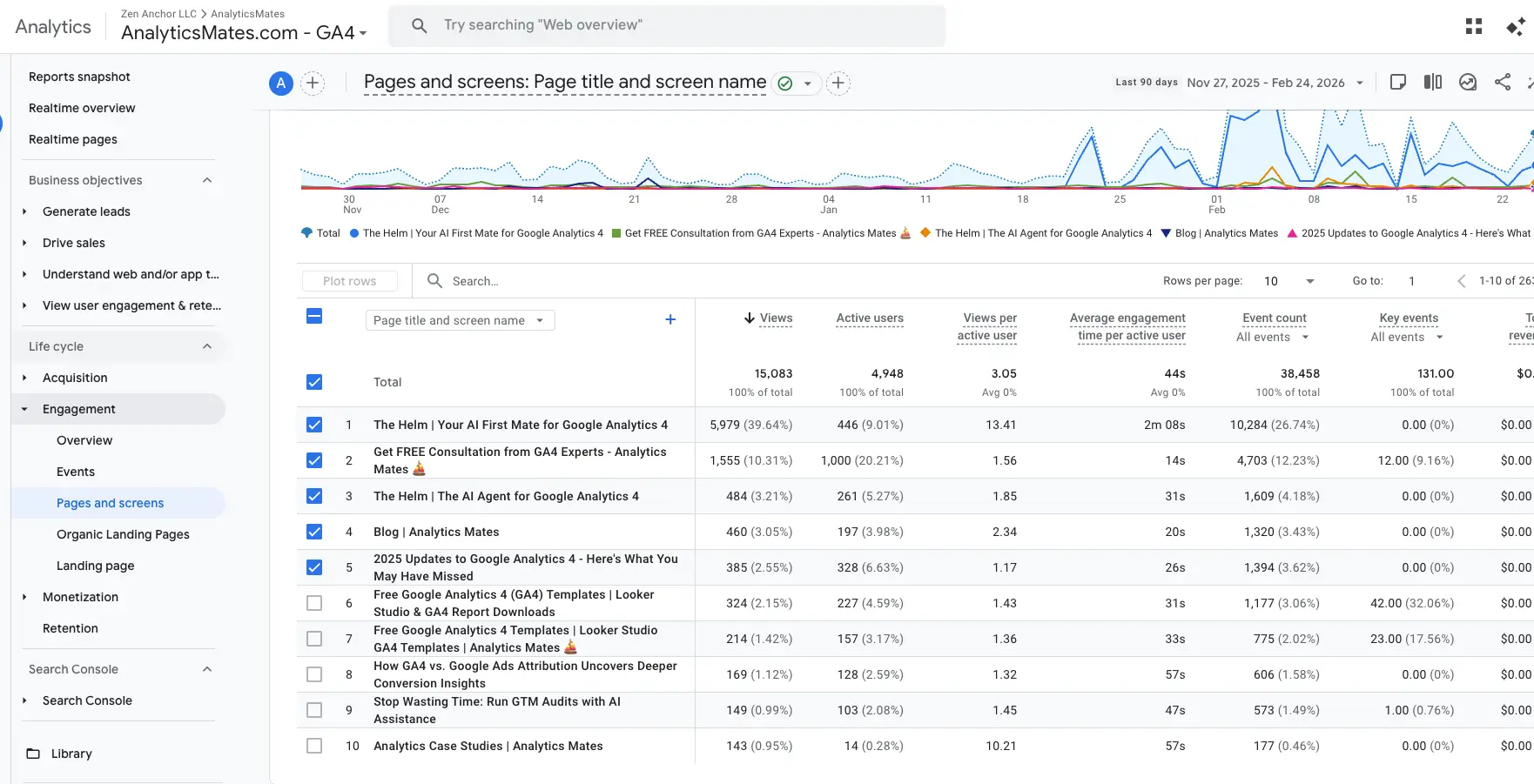
- Attract users to convert?
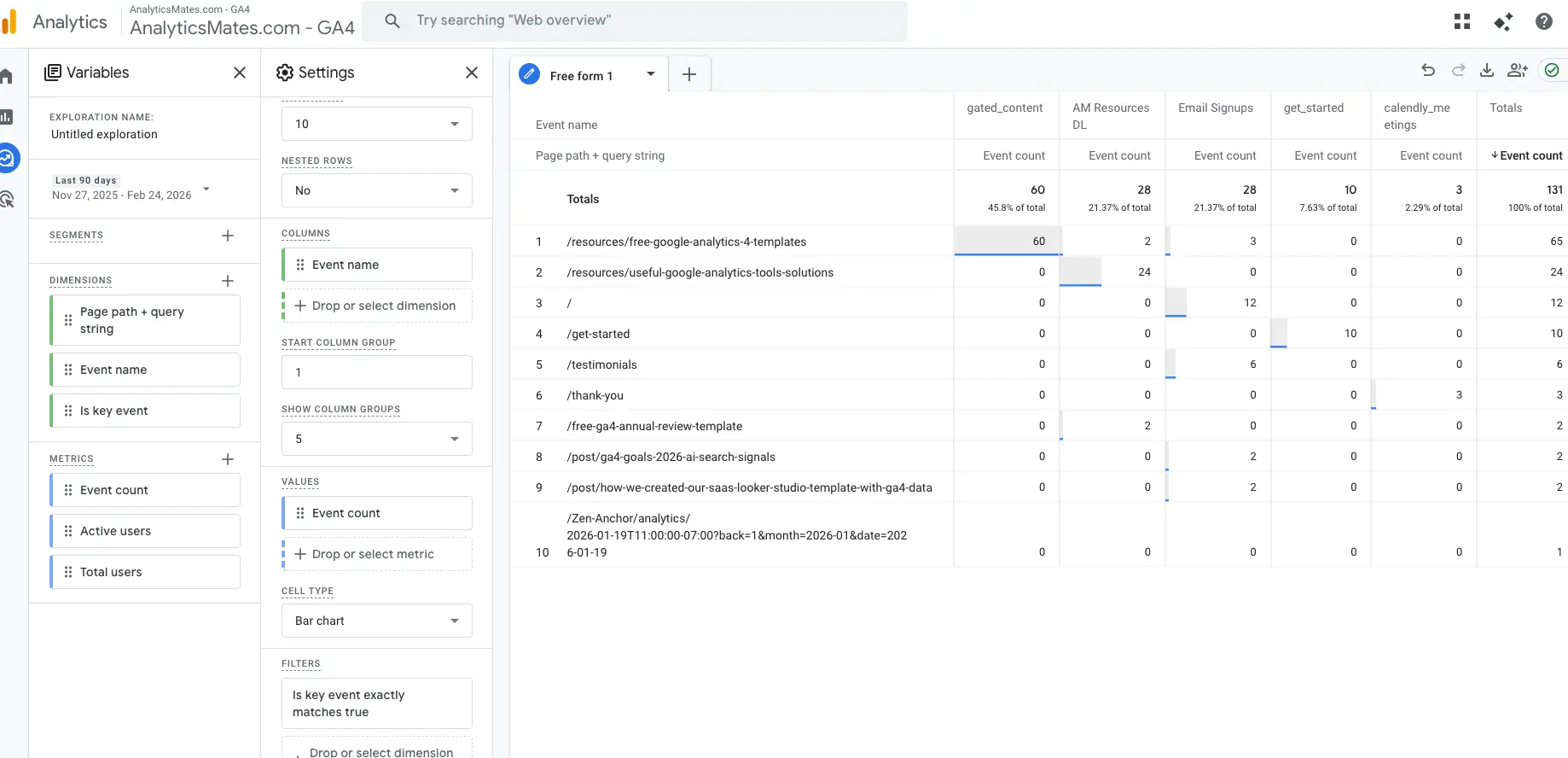
If not, then the citation is just visibility.
And visibility without impact is not a win.
Make the Data Actionable
At this point, stop staring at dashboards and start sorting your findings. Put each page into a clear bucket. This is where analysis turns into action.
Cited + Ranking + Converting
These are your winners.
They show up in AI answers. They rank in search. They contribute to revenue. Do not overthink them.
Go deeper. Add supporting sections. Strengthen internal links from related content. Promote them intentionally. This is where you double down, not experiment.
Cited + Ranking but Not Converting
The visibility is there. The outcome is not.
If people are finding the page but not taking action, the issue is usually clarity. Is the offer clear? Is the next step obvious? Does the page match the intent behind the query?
Tighten the message. Make the call to action stronger. Remove distractions. This is not a traffic problem. It is a positioning problem.
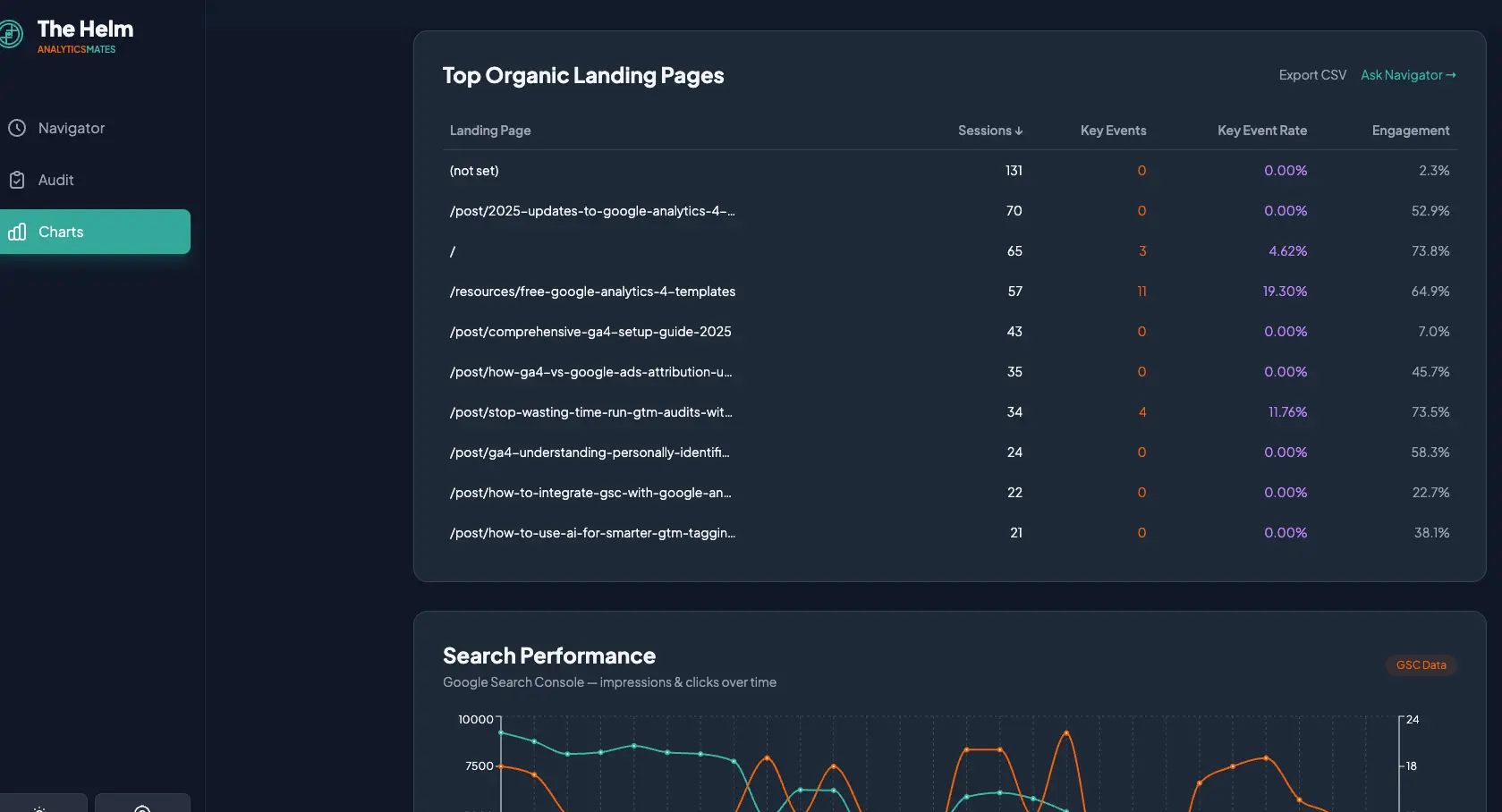
If you’re reviewing just a few pages, you can piece this together manually. But once the list grows, it turns to switching between tools. You check rankings in the Search Console. Then you open GA4 to see if those same pages convert. Then you try to line it up somewhere else just to see what is actually driving conversions (key events).
We’ve already integrated Google Search Console into The Helm, so ranking data sits alongside engagement and conversion signals. That makes it easier to spot pages that rank well but do not generate results and download that gap report when you need it.
Cited but Not Ranking
This is a quiet opportunity.
AI systems are pulling from your content, but search rankings are weak. That often means the structure is solid, but the SEO fundamentals need work.
Revisit keyword targeting. Improve internal links. Strengthen metadata. Add depth where the topic feels thin. Authority may be forming. Now support it properly.
Ranking but Not Cited
These pages perform in traditional search but are invisible in AI answers.
Usually, the content is good but hard to extract. Long paragraphs. Buried answers. Headings that are not clear.
Make it easier to read. Add concise answer sections. Simplify structure. Cut filler. Help machines and humans understand your point faster.
This is where clarity replaces guessing.
What To Do Next
Keep this practical.
- Write clearer, more direct answers.
- Use structured subheadings that make key points easy to scan and extract.
- Strengthen internal links between related pages so authority flows naturally.
- Clarify your brand, services, and expertise so they are unmistakable.
- Remove filler that weakens clarity.
This direction is consistent with Google’s Helpful Content guidance, which emphasizes people-first writing, clear expertise, and avoiding content created purely to rank.
Then go back to tracking AI visibility monthly and compare those trends against rankings and conversions.
Most importantly, do not react to every fluctuation. Look for patterns over time and adjust based on sustained movement, not short-term noise.
Do Not Confuse Attention With Results
So before we wrap things up, we just want to say, and remember that AI visibility can feel exciting. Seeing your brand appear in AI-generated answers inside tools like Bing Webmaster Tools or user behavior shifts in Microsoft Clarity might look like proof that your content is “working.”
But here’s the truth. AI visibility is a signal. It is not a success metric.
If we treat it like a trophy instead of a diagnostic input, we risk optimizing for attention instead of impact.
FAQs
1. Can AI citations drive brand awareness even if they don’t drive clicks?
Yes. AI mentions can increase brand familiarity. But awareness without measurable engagement still needs to be evaluated carefully.
2. How often should I review AI visibility data?
Monthly is a good starting point. Weekly may create noise unless your site publishes high volumes of content.
3. Should I optimize specifically for AI inclusion?
You shouldn’t “game” AI. Focus on clarity, structure, and topical depth. AI inclusion tends to follow strong content fundamentals.
4. Why might a page be cited in AI but rank poorly in Google?
AI models often extract structured, well-explained answers even if the page doesn’t rank highly for that keyword.
5. Can AI visibility replace traditional SEO tracking?
No. It should complement it. Rankings and clicks still matter.
6. What if my commercial pages are never cited?
That may indicate your content is too sales-heavy or lacks clear informational structure.
7. How do I know if AI visibility is impacting conversions?
Look at assisted conversions and multi-touch paths in GA4. AI visibility may influence earlier stages of the funnel.
8. Does Bing AI data reflect Google AI visibility?
Not perfectly. But it can act as an early directional signal for structured content performance.
9. Should I create new content just for AI?
No. Strengthen your existing high-performing pages first before expanding.
Conclusion
AI visibility is an emerging layer of search, but it doesn’t replace the fundamentals. Rankings still matter. Traffic still matters. Conversions matter most.
The mistake many teams make is celebrating AI inclusion without checking what happens next.
If you’re serious about understanding your performance in this new environment, you need to connect the dots between citations, search performance, and user behavior. Bing Webmaster Tools shows you where you’re being referenced. Google Search Console shows how you rank. GA4 shows whether any of it drives real business outcomes.
That intersection is where strategy lives.
Don’t chase visibility for the sake of visibility. Measure it. Compare it. Improve it.
And most importantly keep learning as search continues to evolve.
Thank you for reading!
We’re always looking for ways to improve our Google Analytics 4 blog content. Please share your feedback so we can make it even better.
Keep reading
- February 2026 Core Update: Why Your Organic Traffic Dropped and What to Do Now
Organic traffic dropped after the February 2026 Core Update? This guide explains what core updates really do, why rankings fluctuate, and how to audit your site using GA4 and Search Console. Learn how to identify weak pages, align search intent, and strengthen your SEO strategy.
- Turning the Tide: How We’re Responding to AI Overview’s Impact on SEO
Discover how Analytics Mates is tackling the impact of Google’s AI Overviews on SEO. From data-driven analysis to technical fixes, smarter content, and continuous audits, see how we’re adapting strategies to protect visibility, boost engagement, and thrive in a shifting search landscape.
- Why AI-Powered Reporting Falls Short Without Clean GA4 Data
AI tools like Gemini or ChatGPT can transform GA4 reporting—but only if your data is clean. Learn how the Model Context Protocol (MCP) works, why clear conversions matter, and how to make your GA4 setup truly AI-ready for meaningful SEO and performance insights.
Work with us
Need this done for your property?
Analytics Mates handles GA4 setup, GTM implementation, Looker Studio dashboards, and the ongoing measurement operations that agencies and in-house teams don't have bandwidth for.