
February 2026 Core Update: Why Your Organic Traffic Dropped and What to Do Now
For many businesses, organic traffic has dipped. Rankings are shifting. Pages that looked stable for months suddenly moved. Some days clicks look fine. The next day they do not.
It is not surprising that teams start checking their reports every morning hoping things settle down.
And almost immediately the same question appears.
Is this happening because of the February 2026 Core Update?
Or is something wrong with our strategy?
That tension shows up every time Google rolls out a core update. It is part of the cycle.
But before reacting or rewriting pages, it helps to pause for a moment and understand what is actually happening.
What a Core Update Actually Is
Google releases core updates every few months. These updates adjust how Google evaluates and ranks content across the web.
One thing worth clearing up right away. A core update is not a penalty.
It’s not as if Google is manually reviewing your site and decides to punish it. It doesn’t work that way. Instead, it reevaluates how valuable each of your content appears based on things like relevance, usefulness, depth, and overall quality of your content.
That distinction matters.
When traffic drops after a core update, it can feel like something was taken away. In reality, the system is simply reassessing what deserves visibility.
A more useful question is not, “Why did Google hurt our rankings?”
It is this:
Was there something fragile in our content strategy to begin with?
So, we need to remember this - Core updates usually do not create problems. They expose them. One thing we notice in audits is that the pages losing traffic are rarely the ones teams expect. In many cases, the issue is not technical SEO or indexing. It is positioning. Pages rank for general searches, attract traffic for a while, and then lose visibility when Google reevaluates what deserves to stay on page one.
That pattern shows up more often than people realize.
Why You Should Not React Too Quickly
The first reaction many teams have is to start fixing things immediately. Pages get rewritten, sections get deleted, and site structures get changed overnight.
That approach often causes more harm than the update itself.
Core updates take time to settle. Rankings frequently bounce around during the rollout period. A page may drop one week, recover the next, and stabilize later. When we noticed our organic rankings starting to drop in the weeks after the update, our first instinct was to act right away. Instead, we stepped back and reviewed the data.
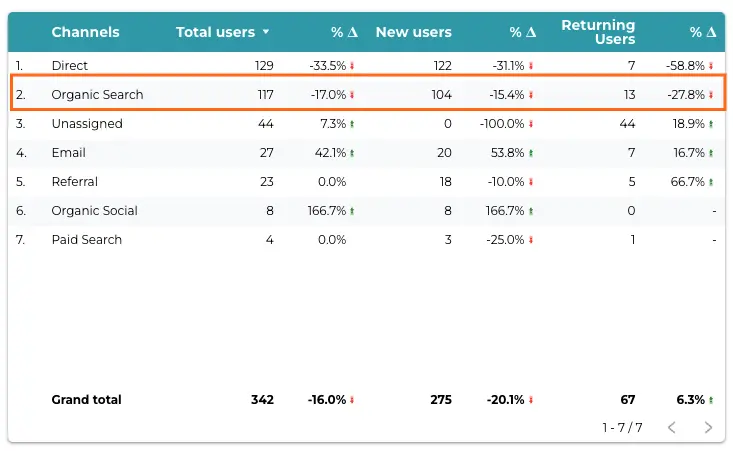
We looked at what was still ranking, what had started dropping, and which pages hadn’t really moved at all. From there, we started mapping out what actually needed optimization and which pages simply needed monitoring before making any decisions.
That step matters because core updates take time to settle. Rankings often shift during the rollout.
So if you start making major changes while that movement is happening, it becomes almost impossible to understand what actually influenced performance.
Think about how you treat analytics data.
You would not change an entire marketing campaign because of one day of GA4 numbers. You would wait for patterns to show up before making decisions.
Search performance should be treated the same way.
Watch trends. Compare time periods. Let the dust settle before making structural changes.
The Hidden Weakness Many Sites Discover
This is where things get interesting.
A lot of websites have pages that look successful on the surface. They rank well. They attract traffic. Reports show steady sessions and impressions.
But when you look closer, something is missing.
They do not produce meaningful business results.
Many sites have pages that:
- Rank well in search
- Bring in steady traffic
- Look strong in reports
Yet those pages generate little to no leads or revenue.
One thing that often surprises teams is how long these pages can appear healthy. They rank, attract traffic, and look strong in reports. But when you examine conversions or next-step behavior, the connection to the business is weak. A core update doesn’t create that gap. It just makes it visible.
When traffic drops after a core update, that weakness becomes harder to ignore.
Then, it raises some uncomfortable questions.
Were we ranking for the right search intent?
Was the traffic purely informational while the business expected conversions?
Did the page give visitors a clear next step?
Was there any real connection to our services or products?
Sometimes the update did not damage performance. It simply revealed a mismatch between traffic and business goals.
Traffic alone is not a strategy.
Alignment is.
How We Reviewed Our Site After the Core Update
Instead of reacting immediately, we started by reviewing the data. A quick audit usually reveals where the real problems are.
Start with GA4 data
In your Google Analytics 4 property, try to isolate organic traffic.
Filter for Organic Search, then compare performance before and after the update window.
Focus on a few key metrics:
- Sessions
- Engagement metrics
- Conversions
- Landing pages losing traffic
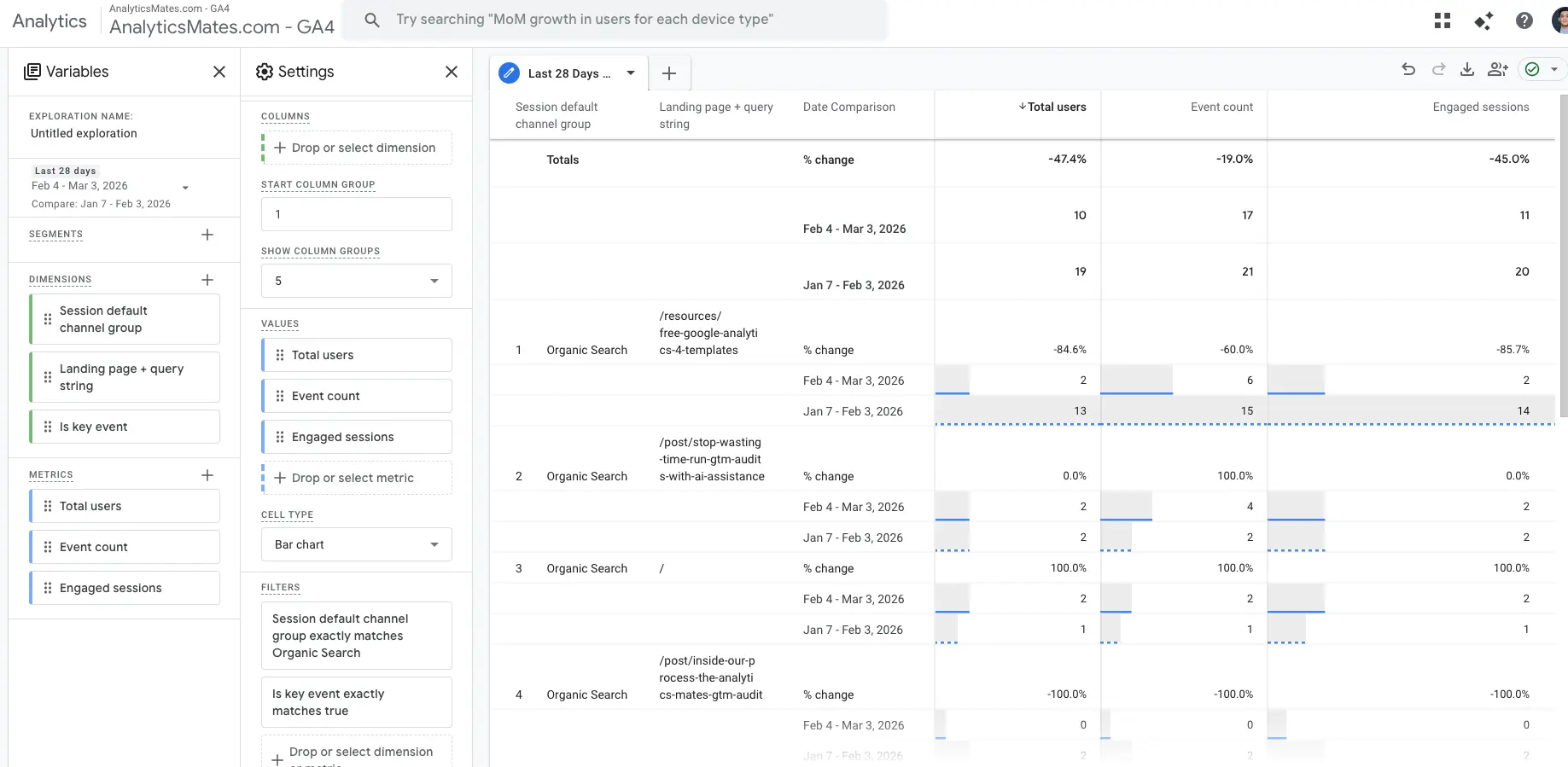
Avoid focusing on a single page drop. Look for patterns across multiple pages.
The challenge in these situations is rarely the data itself. Most teams already have access to GA4, Search Console, and ranking tools. The harder part is connecting the signals across them.
You might see traffic dropping in GA4, impressions declining in Search Console, and content gaps across multiple pages. But those patterns often sit in different reports.
This is one of the reasons we built The Helm. It helps surface those patterns across analytics and content data so teams can quickly understand whether a drop is tied to intent mismatch, thin content, or structural issues across a topic cluster.
Check Google Search Console
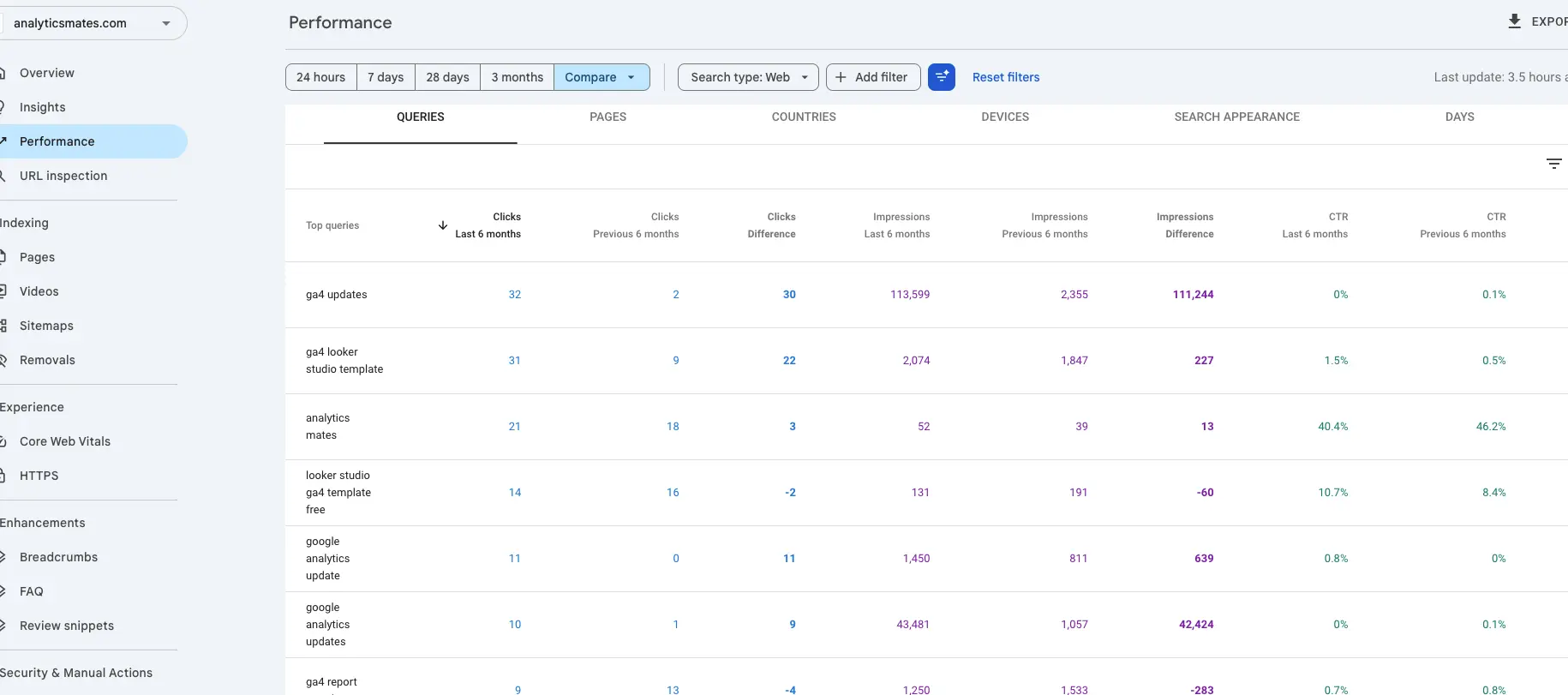
Next, review Google Search Console.
Look for pages that lost impressions or clicks. Then check what changed.
- Did the average position drop?
- Did click-through rates change?
- Did search queries shift?
In some cases rankings stay similar but search behavior changes. That alone can reduce traffic.
Group the Impacted Pages
Now categorize the pages that were affected.
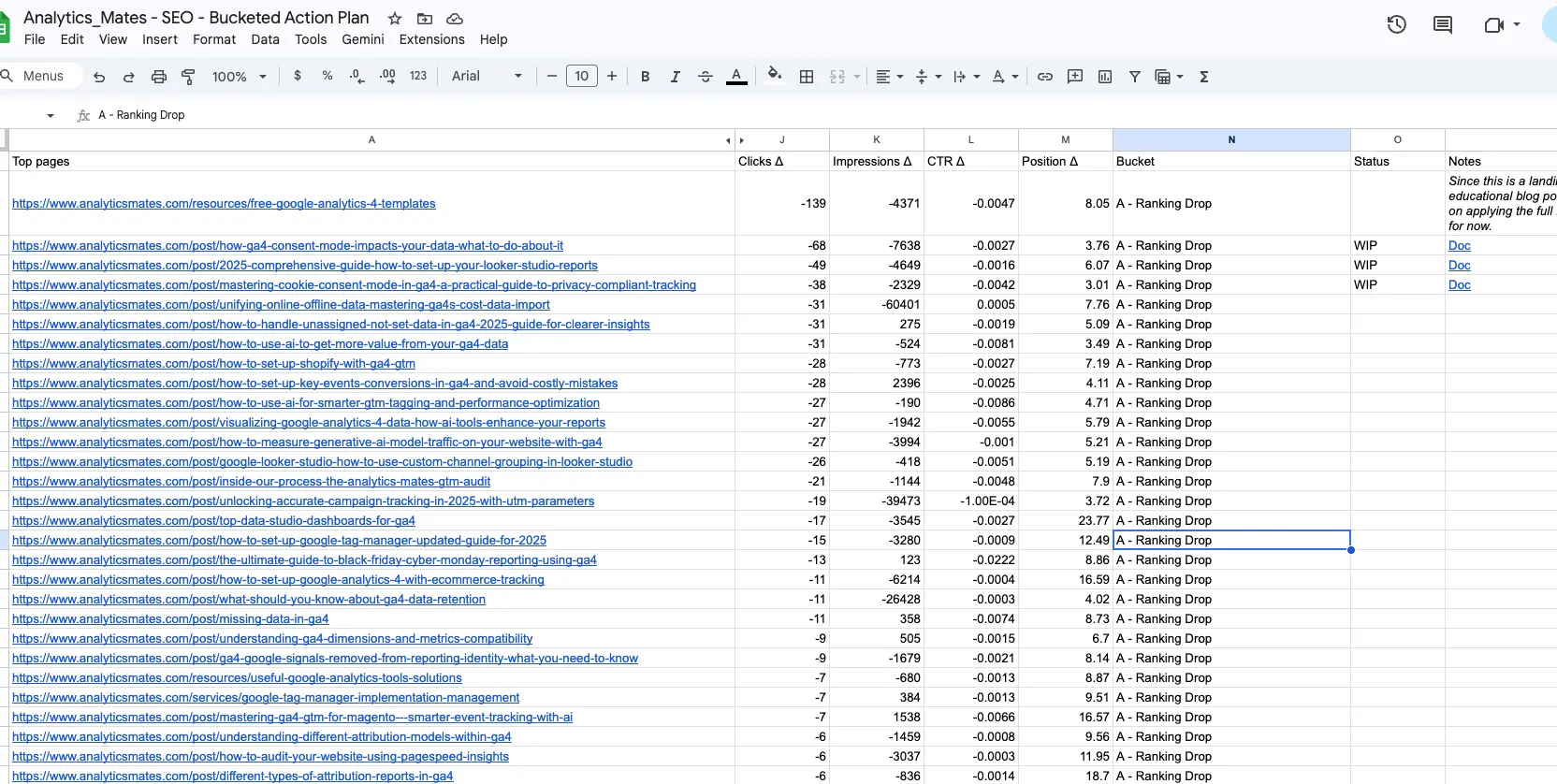
For example:
- Informational blog posts
- Commercial pages
- Product or service pages
- High intent landing pages
This step helps you see whether the issue is isolated or if they are tied to a certain type of content.
Sometimes the pattern becomes obvious once pages are grouped.
Look for Common Patterns
After grouping pages, look for similarities.
Common weaknesses often include:
- Thin or surface-level content
- Articles that have not been updated in years
- Weak internal linking
- Poor user experience
- Lack of authority signals
- Generic topics competing in crowded search spaces
The goal is not to rewrite everything.
It is to identify recurring themes that explain what changed.
The Conversion Gap Most Teams Miss
Even if rankings recover later, business results may not improve.
Why?
Because some pages were never good at converting in the first place.
Many teams assume traffic equals growth. In reality, traffic only matters when it aligns with intent.
Sometimes a core update removes traffic that was never likely to convert in the first place.
Realization can be uncomfortable. But it’s also helpful.
Core updates do not create weak strategies.
They reveal them.
This is the moment when SEO stops being about rankings and starts becoming about positioning and intent. Check out our blog post on How AI and GA4 Can Supercharge Your SEO Content Strategy for more information.
What Usually Makes Things Worse
There are a few reactions that almost always backfire after a core update.
Here are the reactions that usually make things worse.
- Rewriting every page immediately
- Deleting large amounts of content in panic
- Stuffing keywords in an attempt to recover rankings
- Restructuring the entire site during volatility
- Blaming the update without reviewing the data
A better approach is slower and more methodical.
- Audit the data.
- Compare historical performance.
- Strengthen internal linking.
- Clarify the intent behind each page/content.
- Add depth only where you think it will improve value.
Most importantly, staying calm during an update is often a competitive advantage. Many sites track volatility after a core update. Such as:
- Search Engine Roundtable Google Search Algorithm Update
- Advance Web Ranking Google Algorithm Updates
The Direction Google Has Been Moving
If you step back and look at updates over the past few years, a clear pattern appears.
Google continues to reward sites that demonstrate:
- Helpful and original content
- Real expertise
- Clear topical focus
- Strong internal structure
- Clean user experience
- Clear positioning within a niche
Sites built on thin SEO pages or large volumes of generic content tend to experience the most volatility.
That volatility is rarely random.
It usually reflects deeper structural weaknesses.
Frequently Asked Questions
1. How long does a core update usually take to stabilize?
Rollouts can last several weeks. Rankings may fluctuate during that time before settling into more stable positions.
2. Should I pause paid ads if organic traffic drops?
Not necessarily. Organic fluctuations don’t automatically require paid adjustments. Review performance data before making changes.
3. Can updating publication dates help rankings recover?
Simply changing dates without improving content rarely helps. Substance matters more than freshness alone.
4. Is it possible to recover quickly after a core update?
Quick recoveries are rare. Meaningful improvements usually require content refinement and structural improvements over time.
5. Should I remove underperforming blog posts?
Only after analysis. Some posts support internal linking or brand authority even if they don’t convert directly.
6. How do I know if the issue is intent misalignment?
Look at user behavior. High bounce rates, low engagement, and no conversion path often signal mismatched intent.
7. Does AI-generated content increase risk during core updates?
Low-quality or generic content, regardless of how it was created, is more vulnerable. Quality and originality matter more than the tool used.
8. Can internal linking improvements help after an update?
Yes. Clear internal structure helps search engines understand topic depth and authority.
9. Should I redesign my site during a core update?
Major redesigns during volatility can complicate analysis. It’s better to stabilize first.
10. How often should I review SEO performance after an update?
Weekly trend analysis is usually enough. Daily monitoring often leads to overreaction.
Conclusion
The February 2026 Core Update is not the enemy. It’s a stress test.
If traffic declined, audit.
If rankings dropped, segment.
If high-ranking pages aren’t converting, that’s not just an SEO issue. It’s a strategy issue.
Core updates force clarity. They usually reveal the same issues. Thin content. Pages targeting the wrong intent. Topics that are too broad or unclear.
The real goal is not to react to every algorithm change. It is to build something that holds up even when the rankings shift.
It’s to build a site that remains stable regardless of them.
Stay disciplined. Review patterns. Strengthen alignment between traffic and business outcomes.
That’s how you move from reacting to updates… to being prepared for them.
Thank you for reading!
We’re always looking for ways to improve our Google Analytics 4 blog content. Please share your feedback so we can make it even better.
Keep reading
- How to Measure AI Visibility Using Bing Webmaster Tools, Google Search Console, and GA4
Measure AI visibility the right way. Learn how to track AI citations in Bing Webmaster Tools, compare rankings in Google Search Console, and validate real impact in GA4. Discover how to identify ranking pages with no conversions and turn visibility into measurable business results.
- Turning the Tide: How We’re Responding to AI Overview’s Impact on SEO
Discover how Analytics Mates is tackling the impact of Google’s AI Overviews on SEO. From data-driven analysis to technical fixes, smarter content, and continuous audits, see how we’re adapting strategies to protect visibility, boost engagement, and thrive in a shifting search landscape.
- Why AI-Powered Reporting Falls Short Without Clean GA4 Data
AI tools like Gemini or ChatGPT can transform GA4 reporting—but only if your data is clean. Learn how the Model Context Protocol (MCP) works, why clear conversions matter, and how to make your GA4 setup truly AI-ready for meaningful SEO and performance insights.
Work with us
Need this done for your property?
Analytics Mates handles GA4 setup, GTM implementation, Looker Studio dashboards, and the ongoing measurement operations that agencies and in-house teams don't have bandwidth for.