
What Wisconsin dentists asked about AI, and what a practice can do this week
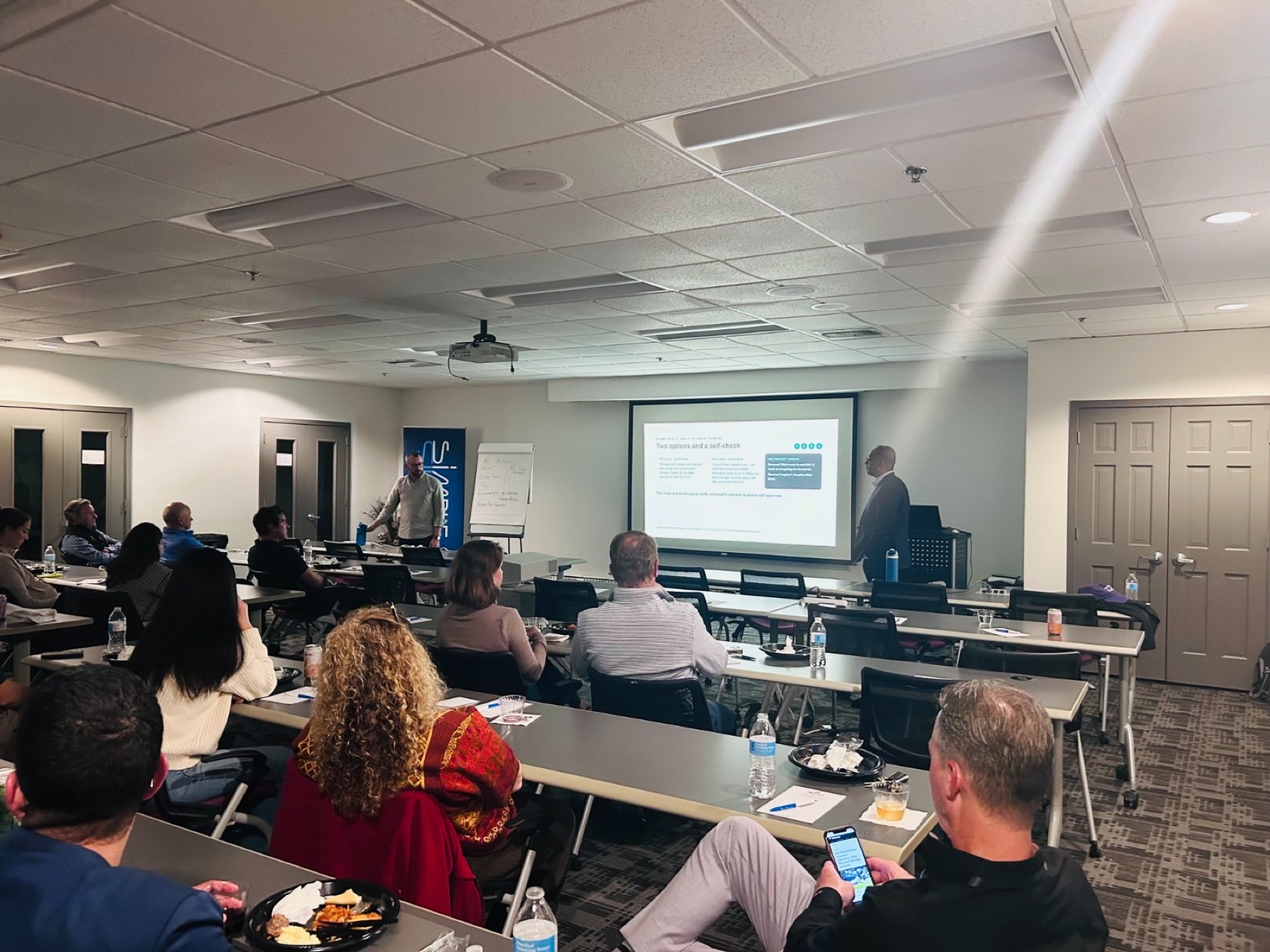
The question that stopped the room was not which AI tool to buy. It was whether a patient’s name belonged in the prompt.
On October 15, 2026, Dr. Raison Bose of Wisconsin Endodontic Group invited me to speak with a Wisconsin dental study group in Milwaukee. The room included roughly twenty practice owners. Raison led the first part of Beyond ChatGPT: Dental Practice and AI. I took the next.
Their requests were practical: help us draft a response to a Google review, and help us turn clinical notes into a follow-up a patient can understand. Do it without putting identifiable patient information into ChatGPT or Claude.
That is less a software decision than an operating habit. Write the job as carefully as a lab prescription. Make the tool challenge its own draft. Then require a person to approve every word before anything is posted or sent.
The prompts, the worked examples, and the PowerPoint live on the resource guide from that session. This recap is what stayed with the room.
The Google review reply that still named the patient
We used a fictional one-star review. The name on it was Dan R. The practice was made up. The phone number was (608) 555-0142. None of that is a real patient.
A bare prompt — write a reply to this review — produced an answer that looked finished. It opened with his name. It treated him as a patient. It hinted at the visit. We ran it more than once. The name kept coming back.
A warmer voice did not fix it. Short, calm, signed by the team. It still used his name. That is the dangerous draft. It is the one someone would post.
Written privacy rules are what changed the answer:
- No name.
- No hint of a visit.
- A general line that the office does not discuss health information online.
- An invitation to call.
Then we asked for two options and a self-check. The check is a list for a person to verify. A person still approves before anything is posted.
A public Google review is not permission to confirm someone is a patient. For a real review, remove the reviewer’s name and any detail that could identify care before using a general-purpose tool. Paste only the public text. Nothing from the chart.
Visit notes into a follow-up a patient can read
The other request from the room was the same shape, pointed at a different job.
Turn a few lines of visit notes into a follow-up a patient can read. Role. Task. Context. Format. Then two options: one shorter, one a little warmer. If the draft adds a fee, a result, or a next visit that was not in the notes, it failed. Invented kindness is still invented.
The notes we used were demo data. An adult. Tooth 19. A crown seated today. Root canal last month. Bite adjusted. Some sensitivity for a few days is expected. Call the office if the bite feels high, the pain increases, or the crown comes off. No fee on that note. A real name, a real chart, and a real phone number stay out of the chat.
A person at the practice reads every word before a patient does. If a fact is missing, the draft should say so. It should not guess.
The operating rule: write it like a lab prescription
Vague instructions produce remakes. “Write post-op instructions” invites a generic page of advice.
The version that worked specified:
- Role: Who should the tool act like?
- Task: What will the patient actually receive?
- Context: Who is it for, what facts are approved, and what information must stay out?
- Format: How long should it be, what must it include, and when should the patient call?
- Review: What would a careful colleague remove or question?
Ask for two options. Ask what changed between them. The practice still owns the judgment. Most owners in that room should start in ChatGPT or Claude, not in a build tool.
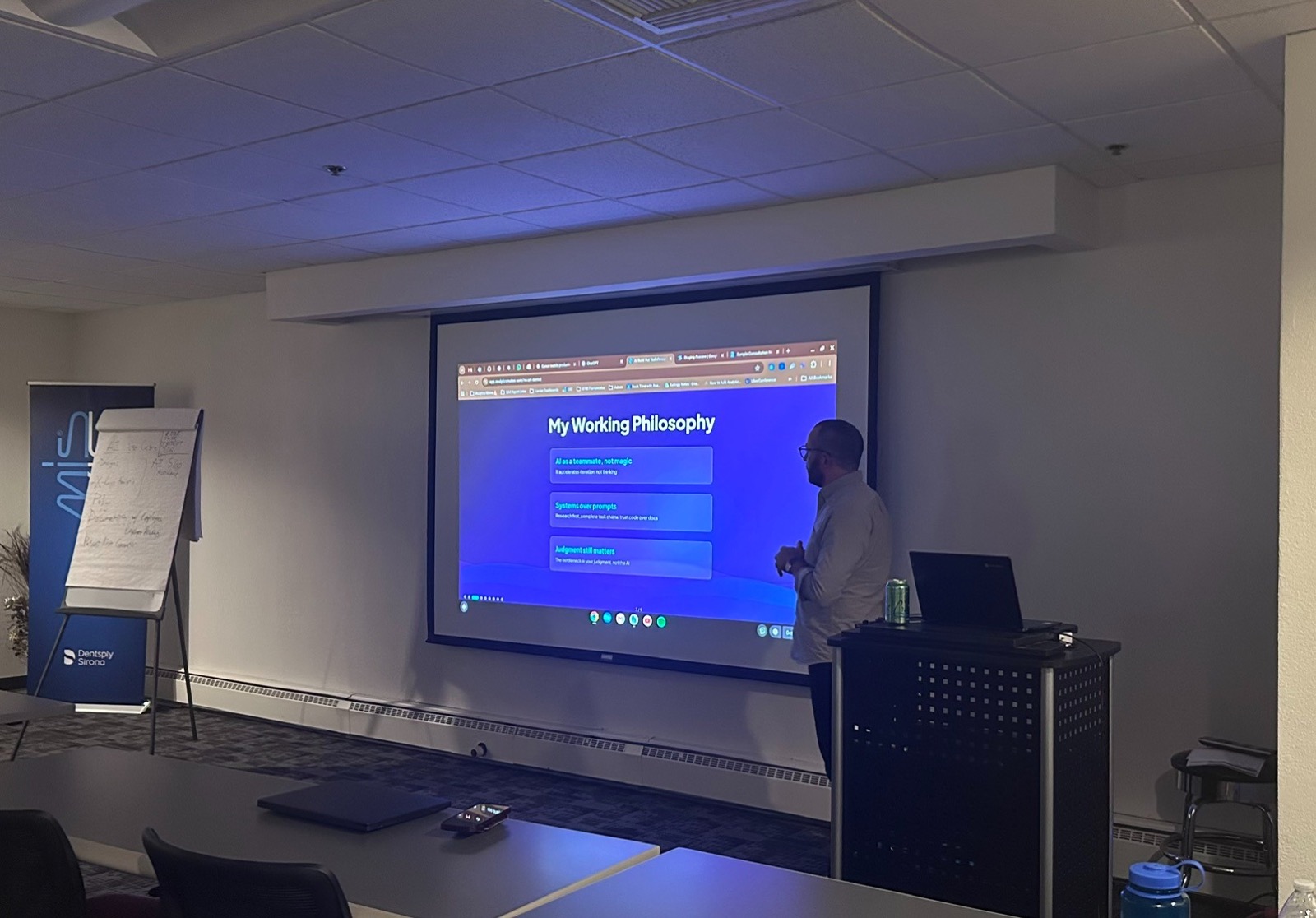
Earlier that day, I gave a separate walkthrough at Nu-Art Dental Lab in Brookfield. The slide on the screen read My Working Philosophy: treat AI as a teammate, build a repeatable system around it, and keep a person accountable for the final decision. Nu-Art did not host the evening study-group session.
The page that booked Thursday at 2:00
We built a demonstration page for a fictional practice, Brightwater Family Dental in Brookfield. The first draft booked “Thursday at 2:00” before anyone at the office had approved a time.
One sentence change made it a request, not a booking. A request is not a booked visit. Nothing on that page is sent or stored.
That is dental practice AI in a small form: the tool will sound sure. The practice still owns the meaning of booked.
What a practice can do this week
This week:
- Start with a fictional or fully de-identified example.
- Open ChatGPT or Claude and paste one prompt from the guide.
- Replace the bracketed practice details.
- Ask for two drafts and a self-check.
- Verify that the output does not invent a diagnosis, fee, result, appointment, or clinical instruction.
- Read the final version aloud before anyone posts or sends it.
For public reviews, remove the reviewer’s name and any detail that could identify care before using a general-purpose tool. Clinical notes, charts, and other patient information require an approved workflow, appropriate vendor agreements, controlled access, and a named human reviewer.
Google access, email, hosting, a real chart, or watching live reviews is a project. It is not a weekend. We showed a ReviewWatch demo in the room. It is a fictional prototype. It does not connect to Google. It does not send email.
This is a class recap, not legal advice or a HIPAA assessment. Before a system handles identifiable patient information, involve the practice’s privacy or compliance adviser.
Raison invited me because the owners in that room already run practices. They did not need another keynote about AI. They needed a reply they could stand behind, and a note a patient could take home.
The leave-behind is the resource guide. The PowerPoint and PDF are on that page. Start with one prompt. Keep the name out of the tool.
Continue building a measurable practice
- Why GA4 and Your CRM Don't Match
GA4, Google Ads, and your CRM will not report the same number. That is not automatically broken tracking. The real failure is losing the identifiers that connect a click to revenue.
- GA4 Dashboards Are Here. Are They Enough?
GA4 now has drag-and-drop dashboards. We built one on ours. Useful for watching GA4. Not enough for client reporting, and it will not fix bad tracking.
A testable workflow
Turn one practice problem into a testable workflow
Have a repetitive task involving patient communication, reviews, marketing, or practice operations? Analytics Mates helps teams describe the job, define the privacy and approval boundaries, and turn it into a prototype that can be evaluated before anyone connects live systems or patient information.